You’ve spent hours measuring, cutting, sanding—only to have your finish ruined by crooked nails or visible hammer dents. Frustrating? Absolutely. And using the wrong fastener tool amplifies the mess. But there’s a smarter way: the brad nailer staple gun combo doesn’t just speed up your workflow—it transforms precision itself.
Why Traditional Fastening Fails for Delicate Work
Hammers leave bruises on softwoods. Finish nails split thin trim. Staples from manual tackers pull unevenly under tension. And don’t get me started on glue-only methods that fail under seasonal humidity swings.
The core issue? Force without finesse. Most DIYers grab whatever tool is handy. Pros know better. Fine woodworking, cabinetry, and upholstery demand controlled penetration—without tear-out or surface distortion. That’s where the brad nailer staple gun shines: micro-adjustable depth, consistent drive force, and dual-mode versatility most single-function tools can’t match.
How to Master Your Brad Nailer Staple Gun Like a Pro
Forget “point and shoot.” Real control comes from understanding pressure settings, material response, and sequence logic. Here’s how to nail it—every time.
Select the Right Fasteners for the Job
Brad nails (18-gauge) excel in finish work: crown molding, baseboards, picture frames. Staples (typically 1/4″ to 9/16″) dominate fabric, insulation, and wire securing. Using staples on hardwood trim? You’ll crack it. Brad nails on upholstery foam? They’ll slip right out. Match the fastener to the substrate—not the tool.
Calibrate Air Pressure Like a Craftsman
Most users run compressors at 90–100 PSI out of habit. Big mistake. Thin cherry trim? Drop it to 60 PSI. Plywood backer? Maybe 75. Test on scrap first. The sweet spot leaves the nail head flush—no dimpling, no proud heads needing putty.
Follow the Sequence: Anchor, Space, Secure
Start at corners or stress points. Then work inward with consistent 6–8 inch spacing. On long runs, over-nailing causes warping. Under-nailing invites gaps. And never fire two fasteners within an inch—wood fibers compress, then rebound, creating micro-gaps that telegraph through paint.

| Fastening Method | Speed (ft/min) | Precision Rating (1–10) | Risk of Damage | Ideal For |
|---|---|---|---|---|
| Hammer + Finish Nails | 3–4 | 5 | High (dents, splits) | Heavy framing (not trim!) |
| Manual Staple Tacker | 5–6 | 6 | Medium (inconsistent depth) | Upholstery, light fabric |
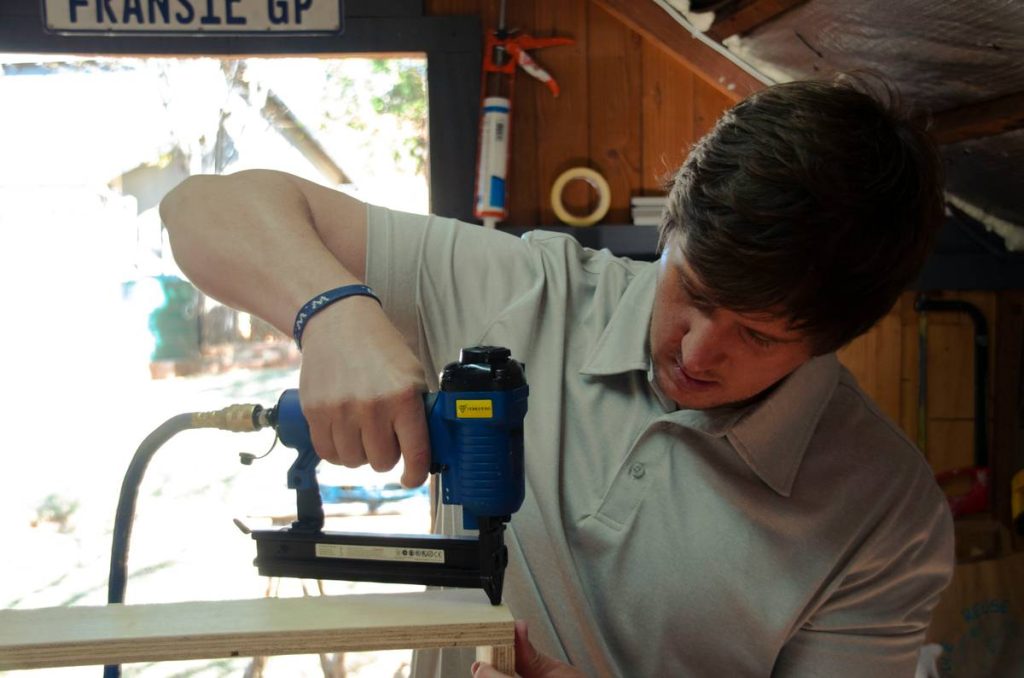
| Brad Nailer Staple Gun | 12–15 | 9 | Low (with proper setup) | Trim, cabinets, delicate joinery |
The Industry Secret Nobody Talks About
Here’s what rental yards won’t tell you: most so-called “combo” tools are compromised hybrids. The real pros use two dedicated bodies—a pneumatic 18-gauge brad nailer for woodwork and a narrow-crown stapler for textiles—swapped onto one compressor via quick-connect fittings. Why? Because internal mechanisms optimized for both often sacrifice jam resistance or depth control. But if you’re committed to a true brad nailer staple gun unit, go oil-free. Oil-lubricated drivers spit residue onto finished surfaces—especially under high-cycle use. Dry-fire models with Teflon-coated drivers? Cleaner, quieter, and last longer in humid garages.
Frequently Asked Questions
Can I use a brad nailer staple gun for outdoor projects?
Only if it uses stainless or galvanized fasteners—and even then, limit it to covered areas like porch ceilings. Most brads aren’t corrosion-resistant enough for direct weather exposure.
What’s the difference between a brad nailer and a finish nailer?
Brad nailers use thinner 18-gauge nails for delicate work; finish nailers drive thicker 15- or 16-gauge nails for heavier trim. Don’t substitute one for the other—they serve different structural purposes.
Do cordless brad nailer staple guns have enough power?
Modern lithium-ion models (like DeWalt’s 20V Max) rival pneumatic performance for intermittent tasks. But for all-day installs, air still wins on consistency and cycle speed.