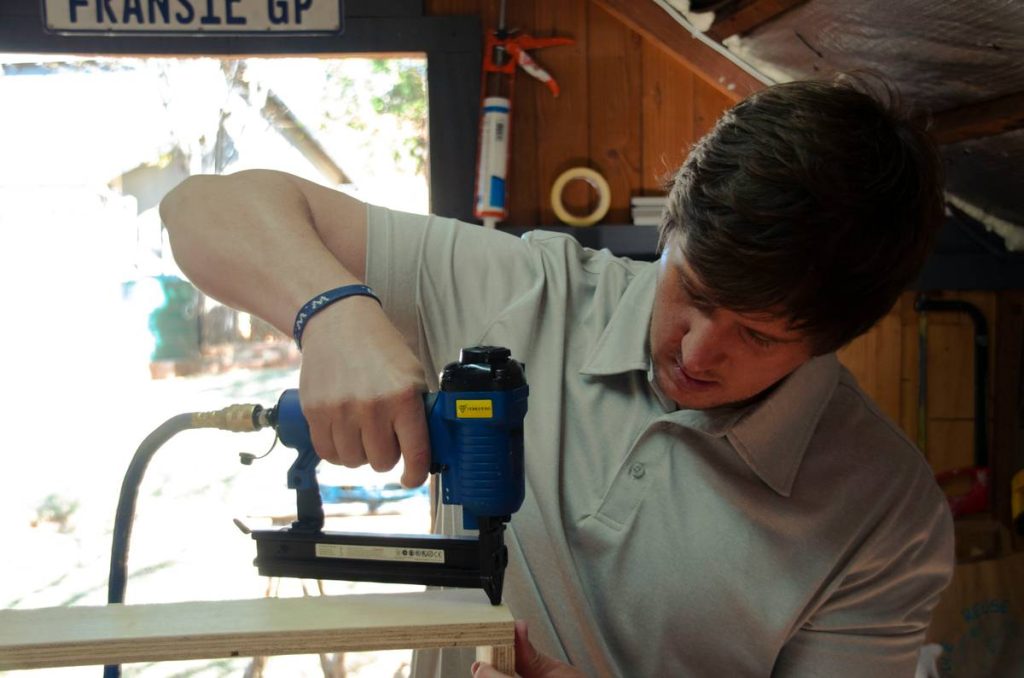
You spent Saturday framing that backyard shed—only to throw your shoulder out hammering hundreds of nails. Your fingers are bruised. The wood’s splintered. And the project’s still not square. Manual nailing is slow, inconsistent, and exhausting. A nail gun for home projects solves all three—without turning you into a weekend casualty.
Hammering Is Outdated (And Costing You Time, Precision, and Sanity)
Traditional hammer-and-nail methods rely on human consistency—which doesn’t exist after hour two of repetitive swings. Missed strikes warp joints. Bent nails weaken structural integrity. And let’s be honest: nobody enjoys the sound of their own groans echoing through an unfinished deck.
Worse? Professionals haven’t used hammers for framing or sheathing in decades. Yet DIYers keep torturing themselves—thinking “real craftsmanship” means doing it the hard way. It doesn’t. Real craftsmanship means using the right tool.
How to Choose and Use a Nail Gun for Home Projects—Without Wasting Money
Picking the right nailer isn’t about brand loyalty or horsepower. It’s about matching the tool to your most common tasks. Here’s how:
Framing vs. Finish: Know Your Nailer Types
Framing nailers drive 2–3.5-inch nails through dimensional lumber. They’re heavy, loud, and built for speed. Finish nailers? Slim, quiet, and perfect for trim, cabinetry, or delicate moldings with 15- or 16-gauge nails.
Air-Powered vs. Cordless: The Real Trade-Off
Pneumatic (air) nailers deliver unmatched power and reliability—but require a compressor, hoses, and setup time. Cordless models offer portability but may stall on hardwood or dense plywood. For occasional weekend warriors, modern lithium-ion cordless finish nailers (like DeWalt’s 20V MAX) often strike the best balance.
Nail Gauge Matters More Than You Think
Using 18-gauge brads on baseboards? Fine. Trying to frame a wall with them? Disaster. Thicker gauges (lower numbers) = stronger hold. Don’t assume “any nail works.” Check your project specs first.

| Method | Time per 100 Nails | Accuracy Rate | Tool Cost |
|---|---|---|---|
| Manual Hammer | 45–60 minutes | ~70% | $10–$20 |
| Cordless Finish Nailer | 6–8 minutes | ~98% | $180–$250 |
| Pneumatic Framing Nailer | 4–5 minutes | ~99% | $200+ (plus $100+ compressor) |
The Industry Secret: Pros Don’t Just Use Nail Guns—They Abuse Them (And So Should You)
Here’s what manufacturers won’t tell you: most residential-grade nail guns are over-engineered. They’re tested to fire 10,000+ nails in factory conditions. But in real-world DIY use—where you might drive 300 nails per month—they last *years*, even if you drop them, forget to oil them, or leave them in the garage.
And this is key: the biggest failure point isn’t the tool—it’s user hesitation. Beginners tap the nose lightly, fearing blowout. Pros press hard, trigger fast, and move on. Firm contact = cleaner penetration. Light taps cause misfires and bent nails. So stop treating your nailer like fine china. Press. Fire. Repeat.
Frequently Asked Questions
What size nail gun do I need for home projects?
For most DIY interior work (trim, shelves, cabinets), a 15- or 16-gauge finish nailer is ideal. For framing, decks, or structural builds, choose a 21- or 30-degree framing nailer that handles 2–3.5-inch nails.
Can I use a nail gun without experience?
Yes—if you start with a cordless finish nailer. They’re lighter, quieter, and less intimidating than framing models. Always wear safety glasses, read the manual, and test on scrap wood first.
Are nail guns worth it for occasional use?
Absolutely. If you’ll tackle more than one major project every 18 months, the speed, accuracy, and reduced physical strain pay for the tool fast—in saved time, better results, and fewer trips to the hardware store for replacement nails.